
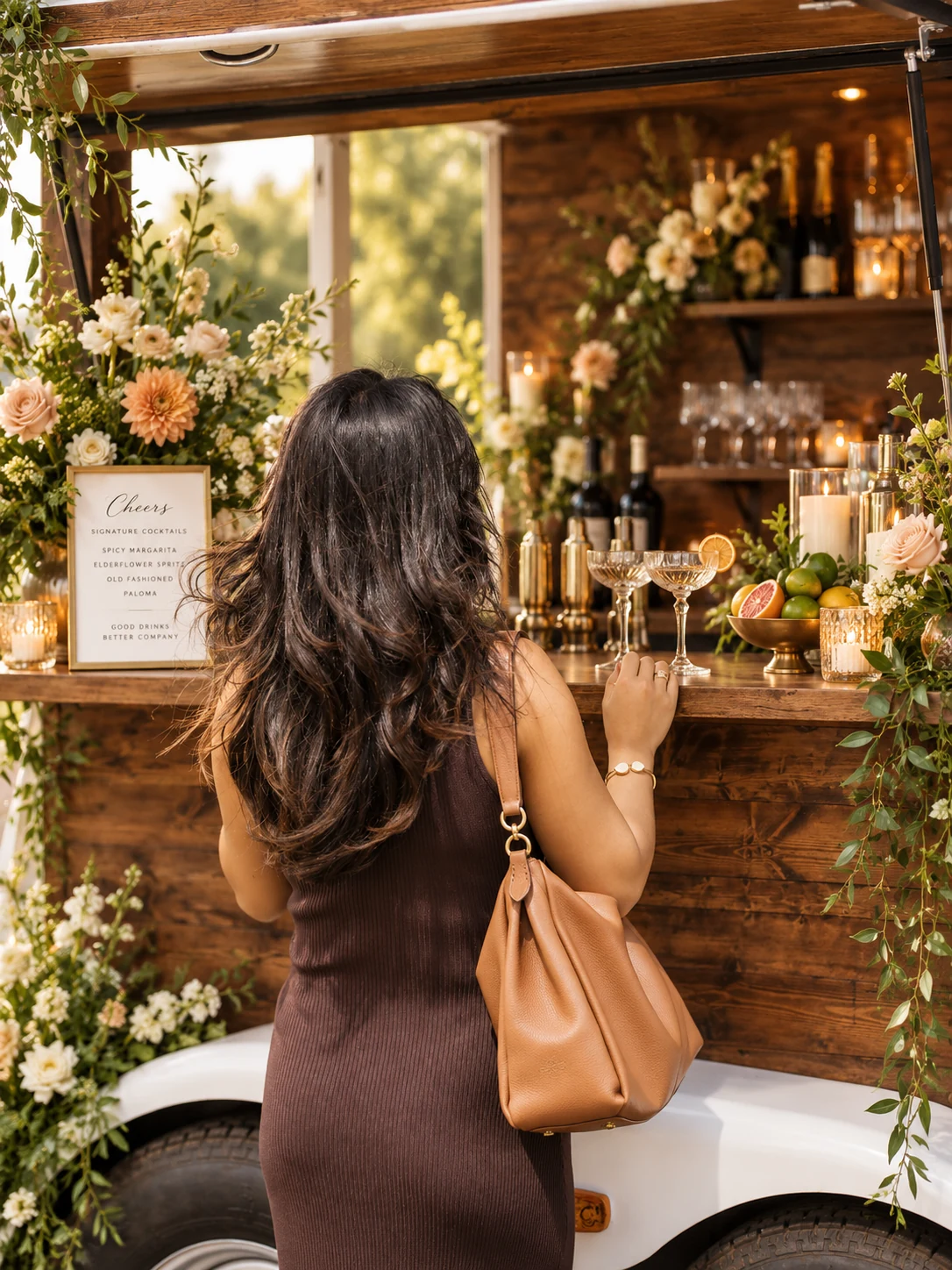
There is no single bartender-to-guest ratio that works for every wedding. A 70-person reception serving beer, wine and two batched signature drinks can be very different from a 70-person reception where every guest is ordering made-to-order mixed cocktails.
At Koa's Mobile Bar, staffing is built around the event instead of a generic ratio. The final quote considers guest count, menu complexity, service duration and where the biggest demand spikes will occur.
Start with guest count—but do not stop there
Guest count is the first planning variable because it establishes the potential number of simultaneous orders. But the more useful question is how many of those guests are likely to arrive at the bar at the same time.
Wedding bars usually experience concentrated rushes immediately after the ceremony, when cocktail hour opens, after dinner and when dancing starts. A bar team that feels perfectly adequate during dinner can still be overwhelmed during the first fifteen minutes of cocktail hour if the menu requires several steps per drink.
Five factors that change bartender staffing
1. The beverage menu
Beer and wine are fast. Spirit-and-mixer drinks take a little longer. Multi-step cocktails with muddling, shaking, several garnishes or special glassware take longer again. The more complex the menu, the more labor each order requires.
This is why a focused menu can be one of the easiest ways to improve guest experience without simply adding staff. Two well-designed signature drinks plus beer, wine and a few simple mixed options are often easier to execute consistently than an open-ended cocktail list.
2. The first cocktail-hour rush
At many weddings, a large percentage of guests walk toward the bar within minutes of the ceremony ending. This is a short, intense demand period. If there is only one service point and every drink is built from scratch, the line can form before the reception has really started.
Preplanned menu design, an efficient work station and the correct bartender count are more important here than during quieter portions of the evening.
3. Bar layout
A bartender who has to walk several steps for ice, mixers, backup bottles or glassware loses time on every transaction. A compact, organized station can make the same staffing level perform much better.
For venues with an existing bar, Koa's looks at where supplies can be staged and whether the bartender has enough working surface. For the mobile-bar setup, the service plan also considers replenishment and guest traffic around the trailer.
4. Service duration
A four-hour reception bar behaves differently from a short cocktail reception or a long event with several distinct service phases. Longer service does not always mean a heavier rush, but it affects staffing hours, breaks, replenishment and total workload.
5. Guest preferences
A crowd that primarily drinks beer and wine creates a different workload from a crowd that strongly prefers cocktails. Your own guest list can therefore be a better planning tool than a generic internet ratio.
A useful staffing conversation
Instead of asking only “How many bartenders do I need?”, bring these details to the quote:
- Total guest count and approximate number of adults drinking alcohol.
- Whether you want beer and wine only, signature drinks, mixed cocktails or a combination.
- How many signature cocktails you want.
- When bar service begins relative to the ceremony and dinner.
- Whether the venue already has a physical bar.
- Whether you expect a large arrival rush or several service areas.
What Koa's publishes about bartender pricing
Koa's current Mobile Bar pricing lists bartender labor separately at $40 per hour per bartender. Mobile-bar packages provide the service foundation, while the final quote confirms the bartender count needed for the specific event.
That structure makes it possible to staff a simple small event differently from a high-volume wedding with a more involved menu.
When adding a bartender can be worth it
An additional bartender is most valuable when the event has a predictable high-volume service period, a complex cocktail menu, a larger guest count, or a venue layout that creates operational friction. The value is not just faster drink production; it can also mean quicker restocking, cleaner work areas and less interruption when one bartender needs to leave the station briefly.
If you are comparing the physical trailer with bartender-only service, read Bartender-Only vs. Full Mobile Bar. For location-specific wedding planning, see the Hilo wedding bartender and Kona wedding bartender guides.
Ready to plan the bar around your actual event?
Send Koa's your date, venue, guest count and service ideas. We can quote the staffing, travel and setup that fit the celebration.
Request Availability & Quote